Do You Know Where Your Retired IT Assets Are Going?
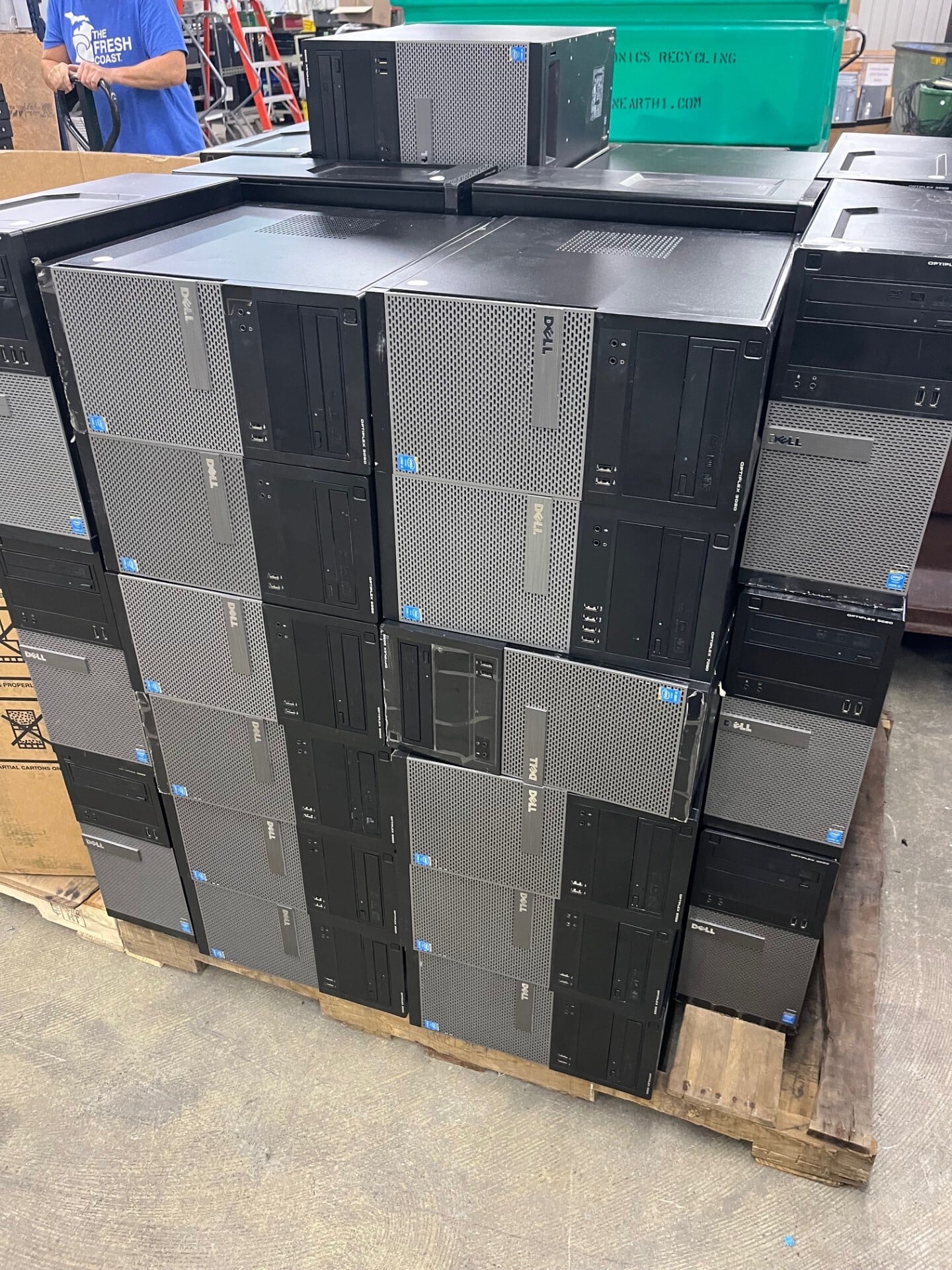
I was scrolling Facebook Marketplace one night when a listing caught my eye. A pallet of electronics. Old towers, some laptops, a box of cords, and a few monitors stacked on top, all posted in a local buy/sell group. Nothing was sorted. Bring cash and a trailer.
That one stuck with me. It wasn't the first time, either. Most weeks I get at least one email from a broker asking for bids on e-scrap, usually pallets of servers, switches, and loose boards. Best offer wins. Out it goes.
Here's what bothers me. Every one of those pallets came from someone who trusted a recycler to take care of it. A school, maybe. A dental office. The hospital down the road. I doubt many of them would be happy to learn their old equipment is now up for grabs to the highest bidder.
So that's why I'm writing this. If you're getting rid of your computers, servers, laptops and other IT equipment, find out where they're going. Then find out what your recycler does with them once they leave your dock.
The photos below were taken right here in Michigan. Someone collected old TVs, monitors, and computer parts, pulled out the easy metal, and burned or dumped the rest. It sat for a long time. Too much untracked e-scrap ends up just like this.
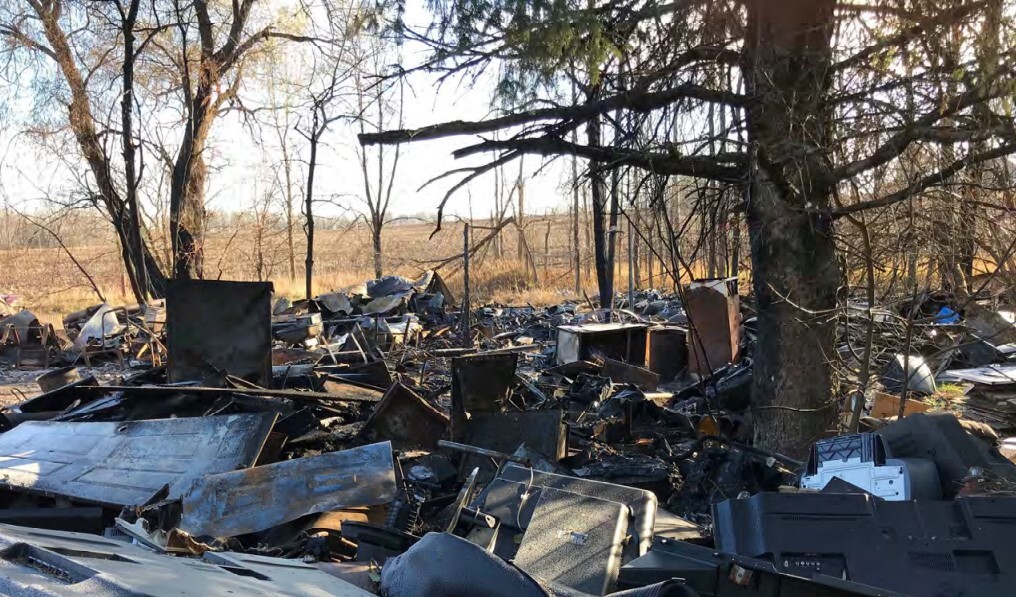
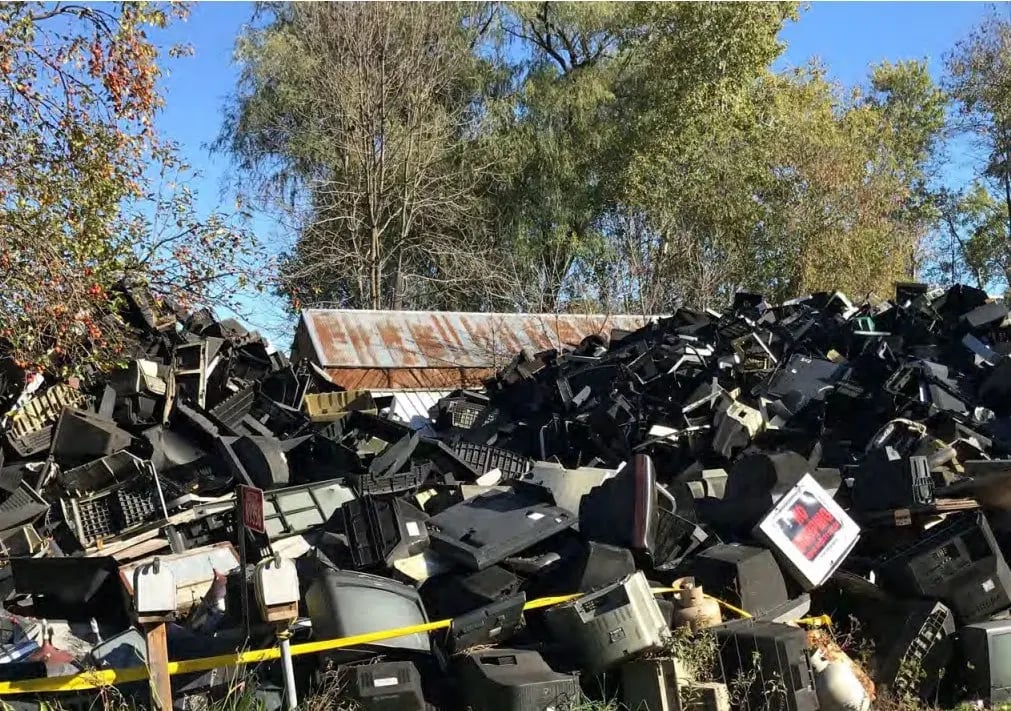
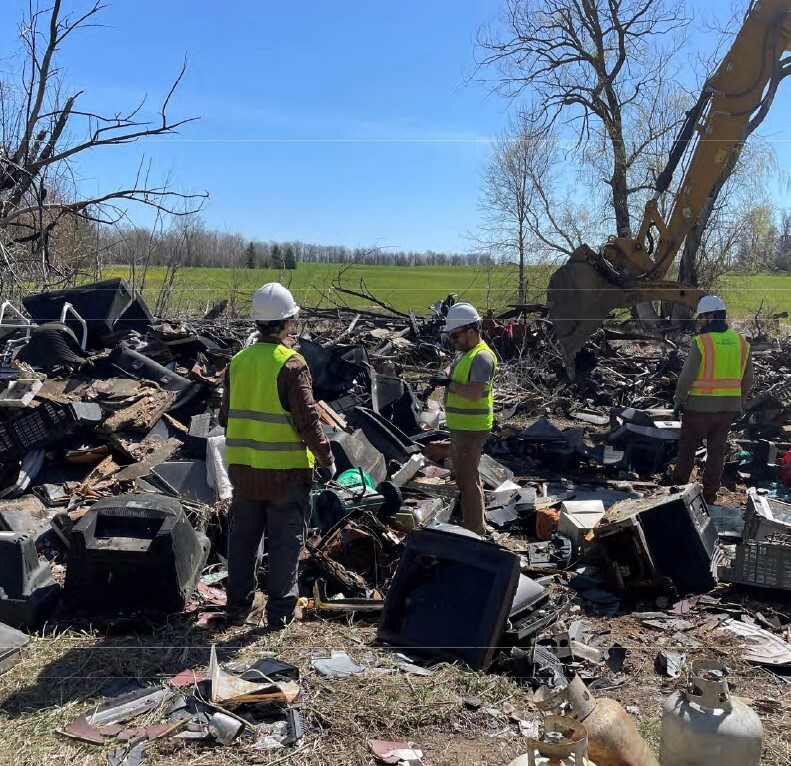
Photos courtesy of the Michigan Department of Environment, Great Lakes, and Energy (EGLE). Source: Illegal Electronic Waste Dump in the Upper Peninsula Cleaned Up After Years, MI Environment.
Where Those Unsorted Pallets Actually End Up
A pallet sold to the highest bidder rarely stays put. It gets resold. Then resold again. Everyone along the way grabs the parts that pay, like processors, memory, and copper, and the rest still has to land somewhere.
That might mean:
- a pole barn or a back lot
- a burn barrel
- a shipping container going overseas
- a ditch on some country road
None of those are good. And by then, the business that owned it has no say at all.
The way I see it, there are three things on the line:
- Your data. Servers and hard drives are packed with it. Customer records, payroll, passwords. Copiers and phones hold data too, and people tend to forget that. On an unsorted pallet, odds are nothing got wiped.
- Your reputation. Asset tags don't fall off. If your gear turns up in a dump, people will know it was yours.
- Our land and water. Electronics contain lead, mercury, and cadmium. Burn them or leave them out in the weather, and those metals soak into the soil and groundwater. That's where we live and raise our kids.
"Please Send Offers!" What These Emails Look Like
Here's an example of what hits my inbox. I've changed the details so it can't be traced back to anyone, but the format is the same. Look closely. Nothing about where the material came from. Nothing about data. Just weights, a pallet count, and a price.
Subject: Servers, Network
18,650 Lbs Servers
24,180 Lbs Network
Lot #XXXX-XXXX Server-Metal / Network Scrap
31 Pallets
Target OBO
Please send offers!!!
Packing list attached
FOB [City, State]
Contact me by phone or WhatsApp: [phone number removed]
Caption to paste under the image:
Example of an e-scrap bid solicitation email we received. Names, contact info, location, lot numbers, and quantities have been changed or removed. This is a modified version meant to show the style of email only, not the original sender or load.
Add it up and that's more than 40,000 pounds of servers and network gear. Most servers have drives. Whose were they? Were they wiped? The email doesn't say, and I'd bet the sender doesn't know. It's just scrap by the pound now.
Questions to Ask Your Electronics Recycler
You don't have to know this industry inside and out to protect your company. Just ask a few questions. A good recycler will answer them without blinking. If they start hemming and hawing, take note.
- Where does my equipment go after you pick it up? Get a real answer. "It depends" doesn't count.
- Can I tour your facility? Legitimate recyclers will be more than willing to have you stop by for a guided tour.
- Do you process it yourselves or sell it to brokers? Some outfits are really just middlemen. Better to know that up front.
- What happens to the hard drives? Wiped, shredded, or both? Who does it, and where?
- Will I get a certificate of data destruction? You should. Keep it on file.
- Can I get a list of what you collected? Asset tags or serial numbers, plus weights. Good recyclers track all of it.
- Who are your downstream partners? Every recycler passes some material along to someone else. Ask who, and how they were vetted.
Responsible Recycler vs. Pallet Broker
Here's a quick side-by-side so you can see the difference.
|
Responsible recycler |
Pallet broker |
|
|---|---|---|
|
Where it goes |
They can tell you |
Whoever bids highest |
|
Data on drives |
Wiped or shredded, with proof |
Often never touched |
|
Asset Tags |
Will look to protect your company and remove them |
Won't care or take the time to remove them |
|
Paperwork |
Certificate of destruction and a disposition report itemizing IT assets requested |
Usually just a weight ticket or count |
|
Downstream partners |
Known and checked out |
Unknown, can change every load |
|
Who's on the hook if it's dumped |
They stand behind their process |
Nobody, and your name's on the gear |
Red Flags to Watch For
- They can't tell you where your equipment ends up.
- They offer to pay you way more than anyone else, with no questions asked.
- No certificate of data destruction, or they act like it's not a big deal.
- They won't name their downstream partners.
- They don't want you to come see their facility.
See any of these? Slow down. They probably aren’t handling the equipment properly, and it’s up to you to find a responsible recycling partner for your IT assets.
How We Handle It at Green Earth Electronics Recycling
When a customer hands us their old equipment, they're trusting us with more than metal and plastic. Their data comes with it. So does their good name. We don't forget that.
Our team works hard to get the details right, every time. Even the boring stuff. Especially the boring stuff, honestly, because that's where things slip. And your equipment will never become somebody's mystery pallet.
We work with small offices and with companies that have thousands of employees. Size doesn't change our goals:
- Reliable. We show up when we say we will and handle your equipment the same careful way every time.
- Easy. Pickup, tracking, and paperwork are on us, so it's off your plate.
- Customized. We build the service around what you need instead of handing you a cookie-cutter plan.
If you ask where your equipment went, you'll get an honest answer. We all the equipment we receive at our locations and ensure that your information is protected. Always.
Want a partner like that? Give us a call or schedule a pickup. We'd love to help.
Frequently Asked Questions
Where does my e-waste go after I recycle it? That depends on your recycler. A good one processes it, handles the data, and only works with partners they trust. Not sure where yours goes? Call and ask.
Is it safe to sell old company computers on Facebook Marketplace? I'd steer clear unless your know how to properly sanitize the hard drives. Any data left on those machines goes with them, and once they're sold, you lose all control over what happens to the leftovers. Look at our DIY blog for electronics recycling here: https://www.greenearth1.com/blog/diy-computer-recycling
What is IT asset disposition (ITAD)? It's a fancy name for retiring old IT equipment the right way. Destroy the data. Track what was collected. Resell what still has value, and recycle the rest properly. It's not just electronics recycling, it's more than that.
How can I prove my data was destroyed? Get a certificate of data destruction from your recycler. Hang on to it. It's your record. Just remember "data destruction" doesn't always mean shredding. Hard drives can be erased or shredded. It's your discretion to chose the service that you're comfortable with. Some industries like banks, hospitals, and government have more restrictions on data destruction. If you want to read more on the industry standard for data destruction, here are the most recently guidelines from the National Institute of Standards and Technology (NIST) https://csrc.nist.gov/pubs/sp/800/88/r2/final
How do I pick an electronics recycler in Michigan? Look for one that tells you plainly where your equipment goes and backs it up with paperwork. Vague answers? Move on.
Also, check their website for claims that they make. If it's vague. Move on.
Another helpful feature, check their Google feedback to see how large they appear. Recyclers with little or poor feedback are ones to stay away from. We're proud to currently have 4.9 stars on our Google profile.