




Introduction
This guide covers electronics recycling in Michigan, including how to recycle Christmas lights and other electronics. It’s for Michigan residents and businesses looking for responsible ways to handle unwanted or broken electronics. Michigan electronics recycling matters because it helps recover reusable materials and keeps potentially hazardous e-waste out of the trash.
Electronics recycling is the process of collecting and processing unwanted electronic products so their materials can be recovered or handled safely. Electronic waste can contain toxic materials like lead and mercury, and certain hazardous materials in electronics require specialized recycling processes. The information below explains what to do with old holiday lights and how to find local options for other e-waste.
A holiday tradition we all know
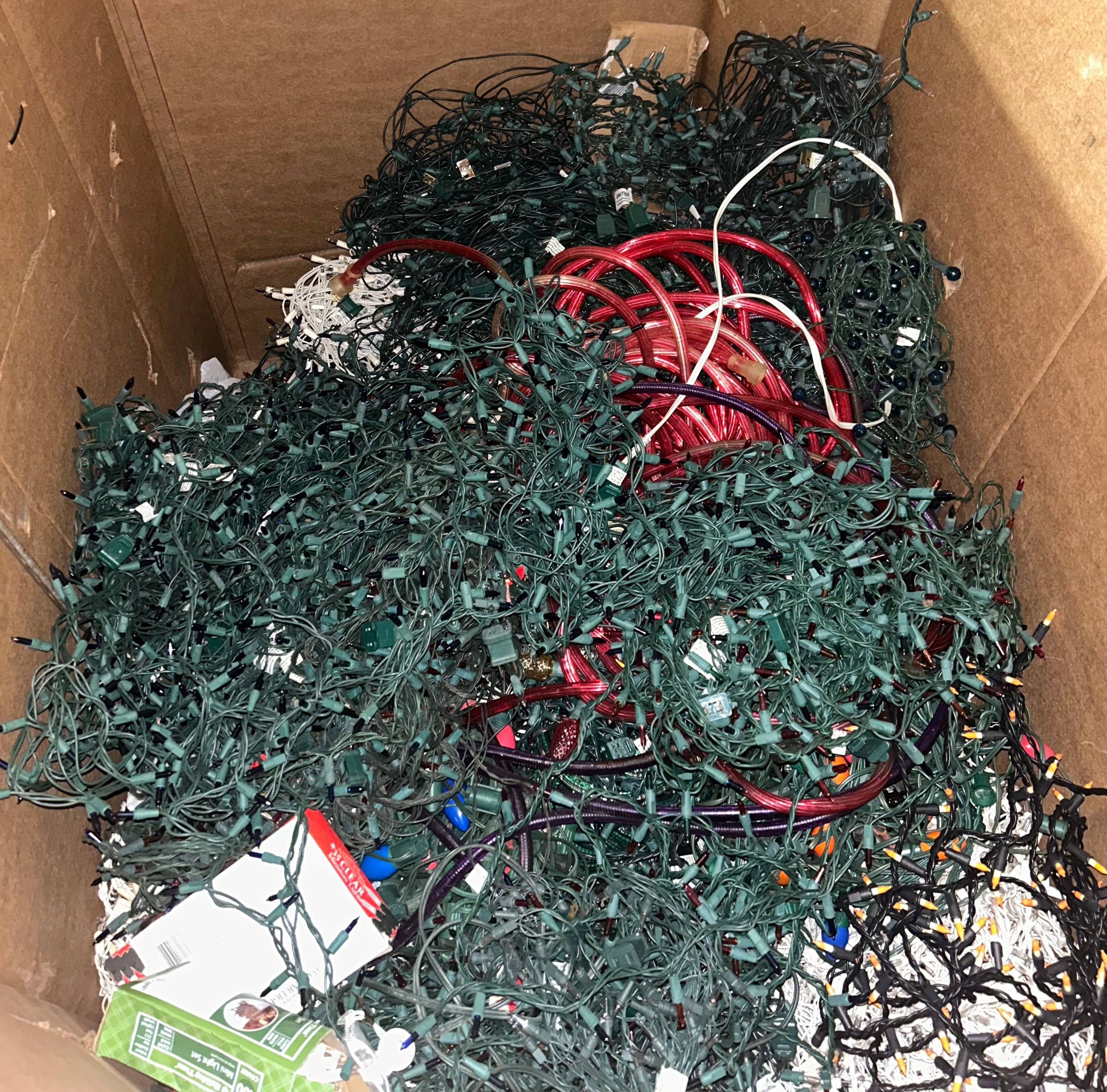
Every year it happens the same way. You haul the boxes down from the attic, untangle what feels like a mile of wire, and plug it in. Half the strand lights up. The other half doesn't. You check a few bulbs, jiggle the plug, and eventually give up.
It's practically a Christmas tradition at this point. And it raises a fair question: what should you do with lights that just won't cooperate anymore?
The good news is that the answer isn't the trash can. At Green Earth, we recycle Christmas lights, working or not. Whether you're decorating the day after Thanksgiving or (like some of our neighbors) a little earlier than that, we're happy to take your broken or unwanted strands and make sure they're handled the right way.
Before deciding what to do with an old strand, it helps to know what it's made of and why those materials can be recovered.
What's actually inside a strand of lights
A strand of Christmas lights looks simple, but there's more to it than you'd think. Here's what's in there and why it's worth recovering.
Material Breakdown
- Copper wire. This is the most valuable part. Running through every strand is copper wiring, and copper can be recycled again and again without losing its quality. Recycled copper goes on to new wiring, plumbing, and electronics.
- PVC and plastic insulation. The green or white coating around the wire is usually PVC. Once it's separated from the copper, the plastic can be processed and reused in other products.
- Glass bulbs. Older incandescent strands use small glass bulbs. That glass can be recovered instead of ending up as broken shards in a landfill.
- LED bulbs and circuitry. Newer LED strands contain small amounts of metal and circuit material. LEDs last longer and use less energy, but they still need proper handling when they finally wear out.
- Plugs, fuses, and connectors. The plugs on each end contain brass and other metals, along with tiny fuses. These are small parts, but they add up.
Put it all together and a box of dead lights is really a box of copper, plastic, glass, and metal. Those materials are worth far more in the recycling stream than in the ground. Knowing what's in a strand makes it easier to see why keeping it out of the trash matters.
Why Christmas lights don't belong in the trash
Environmental Impact
It's easy to think of a strand of lights as a small thing. One box won't make much difference, right? But think about how many homes in our area put up lights each year, and how many strands quietly wear out. It adds up quickly.
When lights go to a landfill, everything inside them goes too. The metals that could be reused just sit in the ground. The plastics take a very long time to break down. And the long, tangled wires can cause real headaches at waste facilities, where they wrap around sorting equipment.
Our grandparents had a simple way of looking at things: don't waste what can still be used. That idea still holds up. A broken strand of lights isn't really garbage. It's a bundle of useful materials that just needs to get to the right place.
Responsible recycling helps recover those materials and keeps tangled wires out of waste facility equipment. Next, here's how Michigan residents and businesses can find appropriate e-waste collection options.
Electronics recycling options across Michigan
Recycling electronics in Michigan is governed by state regulations. Many Michigan communities offer e-waste drop-off locations and collection events, and electronics recycling programs often involve local county events and retailer drop-offs.
Consumers can find electronics waste collectors via EGLE's website, which includes Michigan's statewide directory of registered e-waste recyclers. Checking the directory can help you find a collector and confirm the options available in your area. For Christmas lights, Green Earth also accepts working and nonworking strands at our location.
Once you've found a collection option, it's useful to know what happens to the lights after you drop them off.
What happens after you drop them off
How We Process Lights
Once your lights are in our hands, we take it from there. We sort them, consolidate them with other materials, and send them on to downstream processors who separate the copper from the plastic and recover the rest.
From there, those materials head back into manufacturing. The copper from your old strand could end up in new wiring. The plastic might become something else entirely. It's a simple process, and it's one we've been doing day in and day out.
That's really what we're about at Green Earth. Most days, we're helping businesses of all sizes, from five-person offices to companies with thousands of employees, handle their electronics and IT equipment the right way. Christmas lights are a smaller job, but we treat them with the same attention to detail. Getting things done right matters, whether it's a pallet of servers or a shoebox full of tangled lights.
Now that you know how lights are handled, here's what you can bring and a few ways to make drop-off easy.

What to bring us
We keep this easy. Here's what we accept:
- Incandescent and LED Christmas light strands
- Indoor and outdoor lights
- Icicle lights, net lights, and rope lights
- Strands that work, partly work, or don't work at all
- Extension cords and holiday light timers
A few simple tips will help things go smoothly:
- Don't worry about untangling them. Seriously, we've seen it all. Bring them in a box or bag just as they are.
- Pull off any decorations. Take off clips, hooks, and plastic ornaments that aren't part of the strand.
- Leave out the boxes and packaging if you can. We just need the lights themselves.
- Got other electronics? Bring those too. If you've got an old laptop, printer, or TV collecting dust in the basement, we can take care of that on the same trip. See all of our accepted items here.
With your lights ready to go, the next step is to stop by during our drop-off hours.
Where to find us
Dropping off your lights is quick and simple. Just stop by during business hours and our team will help you unload.
Location: 4200 Niles Road
Drop-off hours: Monday through Friday, 8:00 a.m. to 3:00 p.m.
If you're a business with a larger load, like lights from a storefront, an office building, or a church, give us a call ahead of time. We'll work with you to find an approach that fits.
Once the lights are taken care of, you can get back to enjoying the season and what it's really about.
Enjoy what the season is really about
At the end of the day, Christmas isn't about whether every bulb on the strand lights up. It's about time with family, celebrating with friends, and remembering what the season is truly about.
So go ahead and decorate whenever you're ready. (We won't judge. Okay, maybe a little.) And when you come across those lights that have given up on life, bring them our way. We'll make sure they're recycled responsibly, so you can get back to what matters most.
Merry Christmas from all of us at Green Earth.